After spending time learning about ourselves, our families, and our feelings, I like to end September with an apple theme!
By this point, our classroom family is finding its rhythm. The kiddos are becoming more comfortable with our routines, exploring materials, and playing together. An apple theme gives us something new to investigate while continuing to practice those familiar skills.
We pick, count, create, taste, and explore all things apples—and there are so many ways to bring the learning into play!
Pick and Play
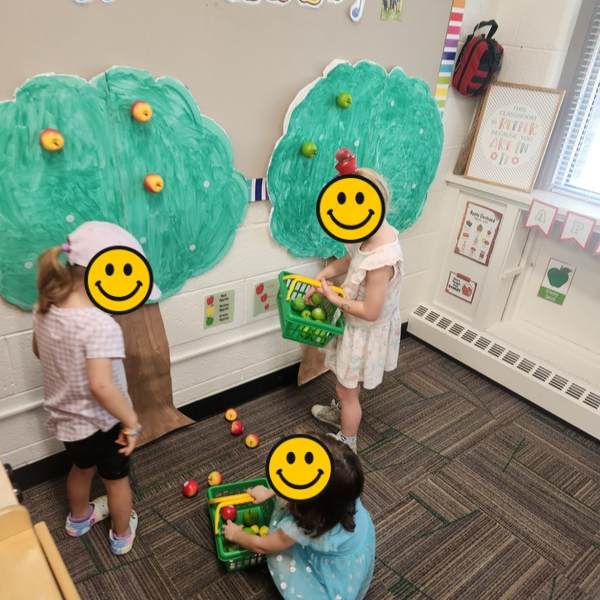
An apple-picking activity is a fun invitation to get moving and use our imaginations.
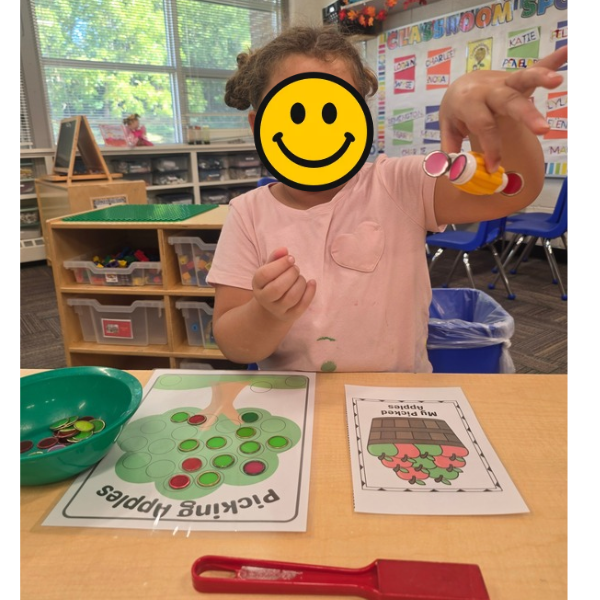
Create a pretend apple orchard with paper apples, baskets, and a classroom tree. Children can pick apples, sort them, fill baskets, and set up a pretend apple stand.
Add a few simple prompts:
Can you pick three apples?
Can you find a red apple and a green apple?
Which basket has more?
How could we share these apples?
The orchard can grow with the children’s ideas. They might take turns shopping or deliver apples to the dramatic play kitchen to bake a pretend pie!
Count Your Apples
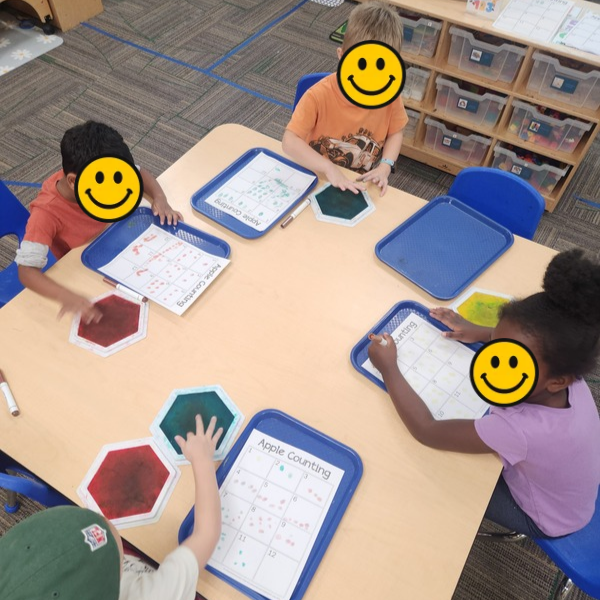
Apples give us plenty of opportunities to explore early math with materials children can move and touch.
We might fill ten frames with apple counters, roll a die and add apples to a tree, or put numbered apple cards in order. Playdough apples are another favorite—roll little apples, count them, and place them on a counting mat.
Some children may be working on counting a small group of objects. Others may be ready to compare quantities or explore how many more they need to make ten.
I like to keep the materials playful and adjust the challenge to fit the learner. A basket of pretend apples can support lots of different discoveries!
Create with Apples
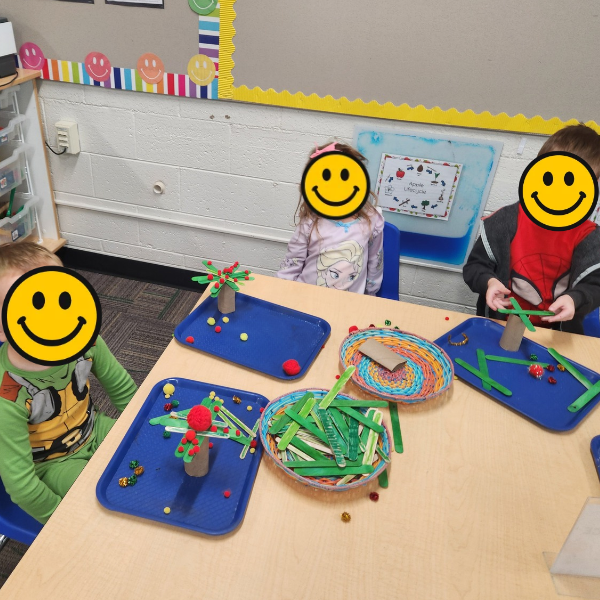
Our apple theme also makes room for art, creativity, and fine motor practice.
A few favorites include:
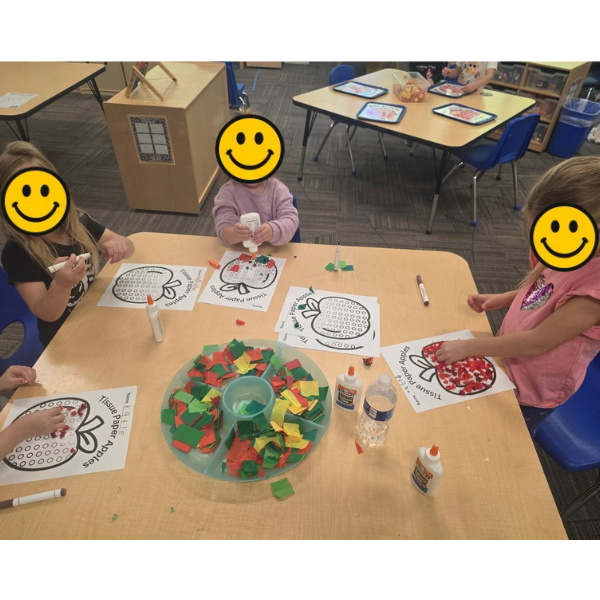
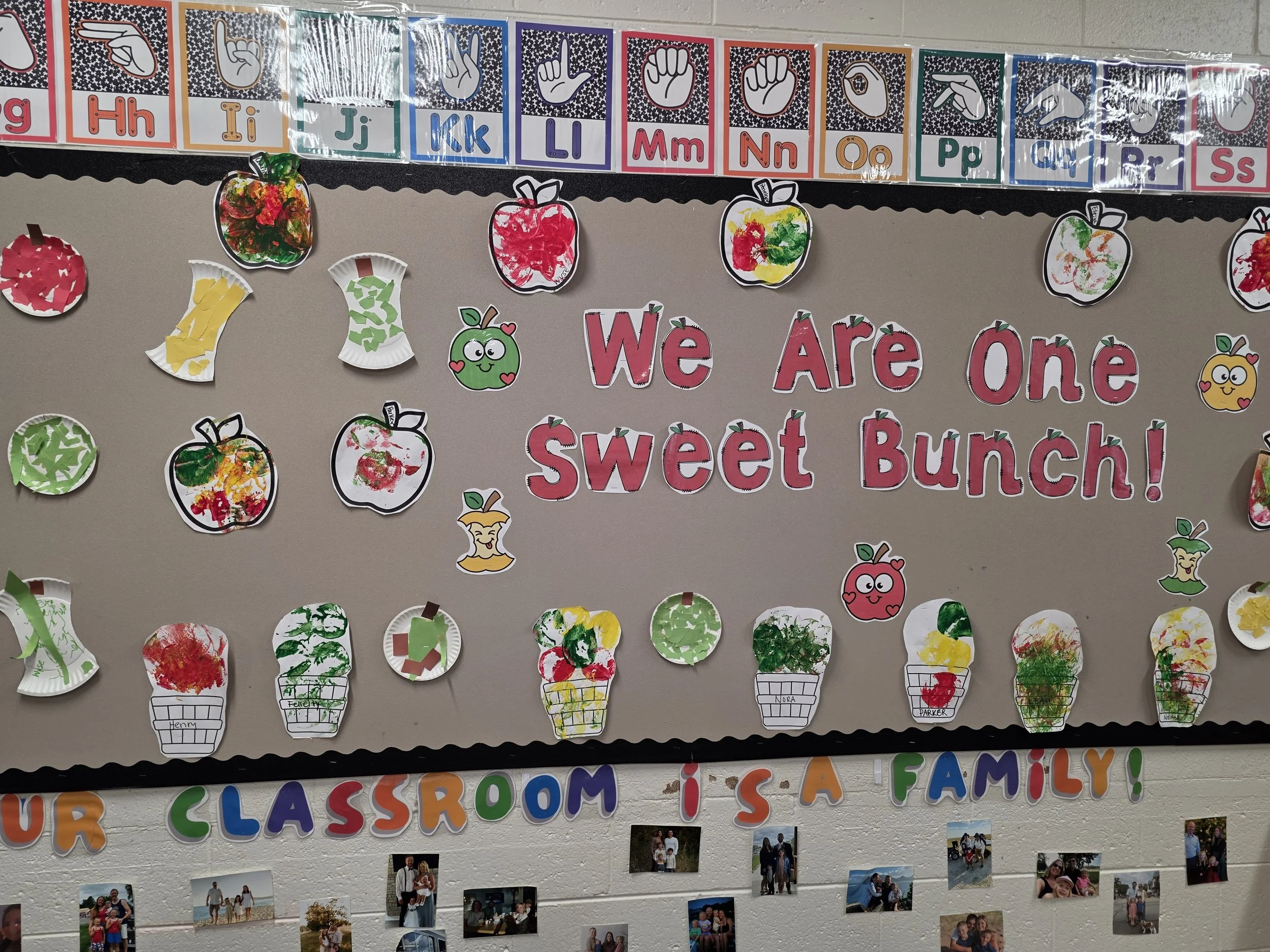
Tissue paper apples: Tear or crumple paper and attach it to an apple outline.
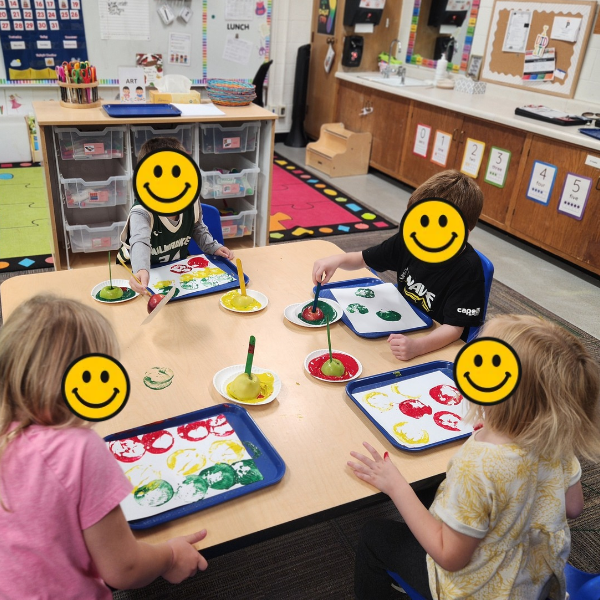
Apple printing: Explore the prints made by apple halves prepared by an adult.
Playdough apples: Roll, shape, and add stems or leaves.
Apple collages: Combine paper, yarn, and other classroom art materials.
Apple name crafts: Arrange the letters in each child’s name using apple pieces.
I love giving children choices in their creations. Their apples might be red, green, yellow, or a whole rainbow of colors! Art is a chance to explore materials and share ideas, so every finished piece can look different.
Become Apple Investigators
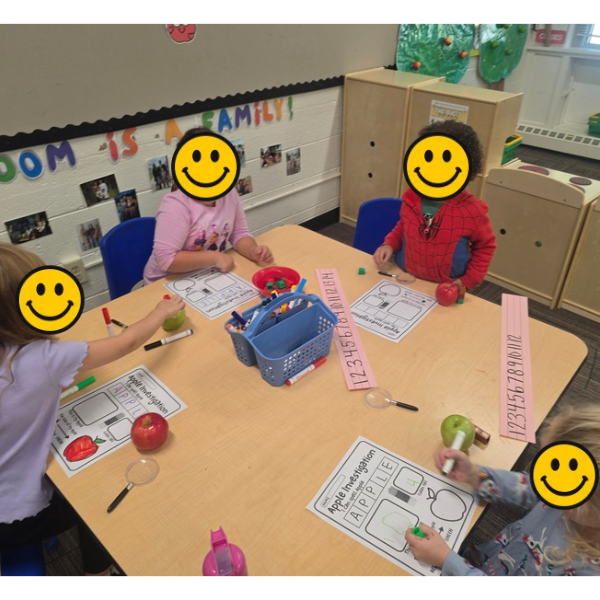
Bring out real apples and give children time to look closely before explaining everything.
What do they notice? What do they wonder?
We can explore the skin, stem, flesh, core, and seeds. Compare apples of different sizes and colors, use magnifying glasses, and draw what we observe.
Try asking:
“What do you think we’ll find inside?”
“How do these apples feel?”
“What looks the same? What looks different?”
“What happened to the apple after we cut it?”
Children’s questions can guide our next investigation. Sometimes the most interesting part of the activity is something I hadn’t planned!
Taste, Talk, and Compare
An apple taste test is a simple way to bring our senses into the theme, following classroom food and allergy guidelines.
Offer a few apple varieties and invite children to describe what they notice. Is the apple crunchy, juicy, sweet, or tart? Do the varieties taste the same?
Then create a class graph to show everyone’s favorite. Count the responses together and compare the groups.
Tasting is always a choice. Children can still observe the apples, help with the graph, and join the conversation without taking a bite.
Bring Apples into Literacy
There are plenty of ways to weave literacy into our apple play, too!
Read apple books, sing apple songs, match uppercase and lowercase letters, or invite children to find the letters in their names. Add paper and writing tools to the pretend apple stand so students can make shopping lists and signs.
After an investigation, children can draw an apple and tell you about their discoveries. Write down their words to show that their observations and ideas can become something we read.
These little opportunities make literacy part of the experience.
Follow the Fun
You don’t need to do every apple activity in one week. Choose a few invitations, notice what captures your students’ interest, and build from there.
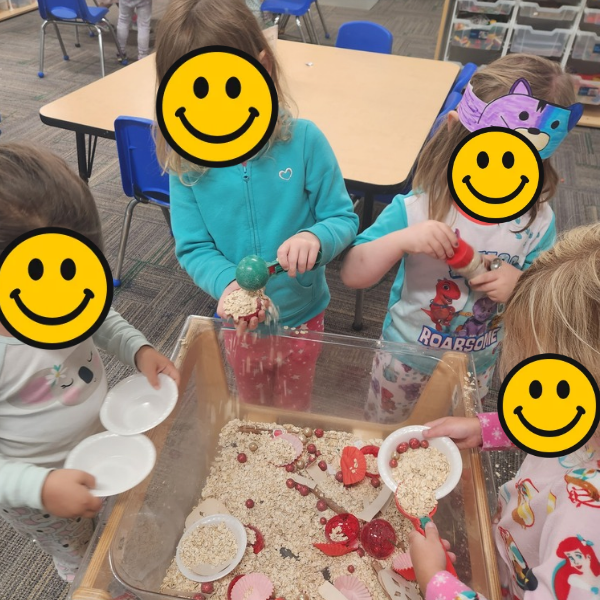
If they love picking apples, keep the orchard open. If they’re fascinated by seeds, spend more time investigating. If the pretend apple kitchen is busy, add recipe cards and materials to your sensory bin for making apple pie.
At TinyMindsMatter, I love themes that bring different kinds of learning together through hands-on play. Apples give us opportunities to count, create, ask questions, and work with friends as we wrap up September.
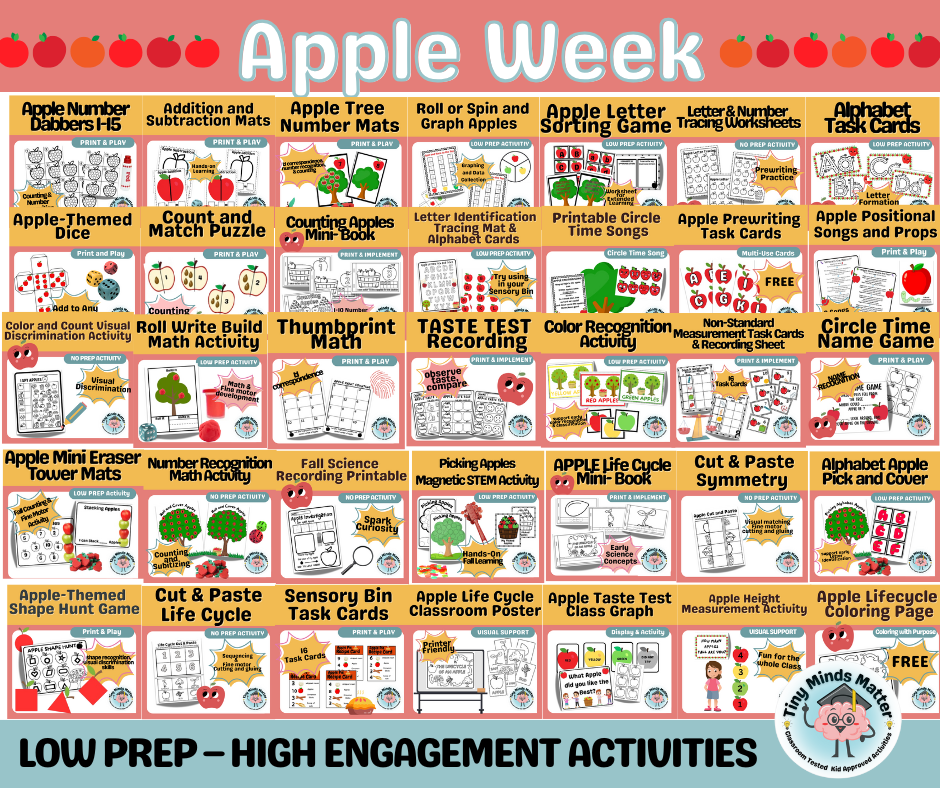
Looking for activities for your apple theme? Visit my TinyMindsMatter Teachers Pay Teachers store for apple math, literacy, science, and craft resources inspired by activities I use in my classroom.
Let’s pick, count, create, and see where our apple discoveries take us!
Find Apple Resources here » TinyMindsMatter | Teachers Pay Teachers
